Top Takeaways...
1) Less is more – Limiting your notes, avoiding overuse of the root, and leaving space forces better phrasing and tension.
2) Think like a storyteller – Build solos gradually, use dynamics, and shape melodies like a singer for emotional impact.
3) Play with confidence – Own mistakes, learn licks by ear, and make intentional choices to keep your solos fluid and engaging.
Limit Your Notes
If you’ve been playing for a while, you’ve probably experienced that dreaded moment where every solo you play starts to sound the same.
The notes are fine, the tone is solid, but something is missing—it’s not exciting you, let alone the listener.
One of the simplest ways to shake things up is to intentionally limit yourself.
For example, try picking just four notes on the D and G strings and solo using only those.
Throw in some bends if you like, but don’t let yourself stray from those notes.
At first, it feels like a straitjacket.
Your fingers will itch to run through every pentatonic scale position you’ve memorized.
But here’s the magic—this limitation forces you to pay attention to phrasing, bends, rhythm, and dynamics.
You start thinking less about “What note should I play next?” and more about “How should I deliver this note?”
That’s where expression lives.
You’ll be surprised how much personality and emotion you can squeeze out of just a handful of notes.
Avoid Overusing the Root Note
The root note—the “home base” of your scale—feels safe.
Too safe.
While it’s a natural anchor, leaning on it too much kills the tension that gives solos their emotional pull.
Imagine a movie that gives away the ending in the first five minutes—there’s nothing left to look forward to.
Instead of camping on the root, dance around it:
-Tease it - Play as if you're going to land on it, but don't.
-Pass by it without stopping - Don't land on it with intention, use it as a passing tone.
-Delay hitting it until the moment really counts - put off playing it until the last possible moment.
This creates a sense of longing in the listener’s ear, making the eventual resolution feel like a payoff instead of just another sound.
That’s how you turn a guitar scale exercise into a musical statement.
Make Space Part of the Music
In soloing, space is not just the absence of sound—it’s an active part of the story you’re telling.
Many guitarists fall into the trap of filling every moment with notes, but pauses are what give phrases room to breathe.
Think of it like conversation.
If you never stop talking, the words lose impact.
But if you pause right after saying something important, people lean in to hear what’s next.
In a solo, silence after a high, sustained bend can be exciting.
That gap is charged with tension.
One great way to get comfortable with space is to try the “hold your breath” trick—literally hold your breath while you solo.
You’ll naturally leave pauses when you need to inhale, which makes your phrasing sound more like a singer’s.
This trick alone can transform your playing overnight.
Think in Melodies, NOT Boxes
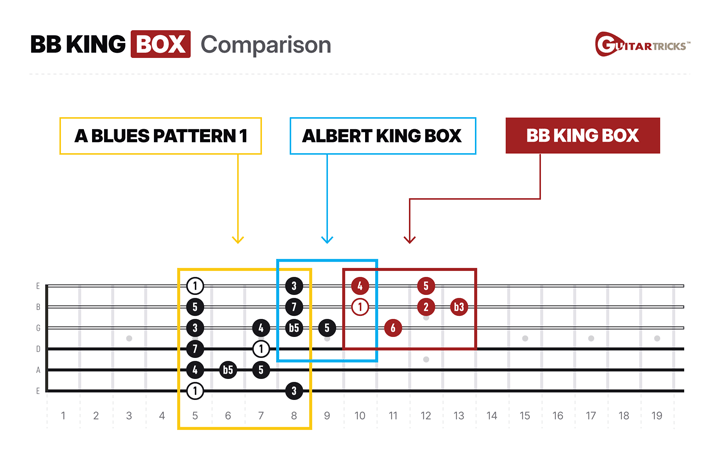
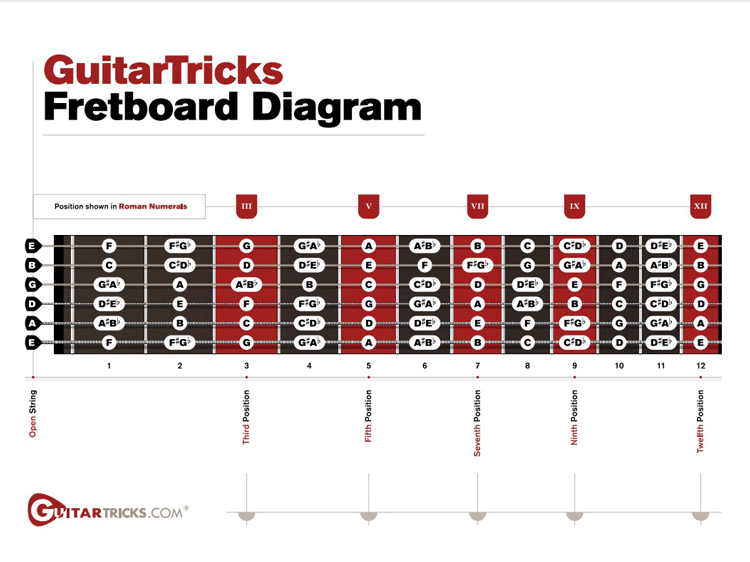
Guitarists often get trapped in thinking about scale positions as rigid “boxes” on the fretboard.
The BB King box and the Albert King Box are two of the most famous scale boxes.
While these patterns are helpful for navigation, they can also lead to solos that sound mechanical.
Instead, think in terms of melodies.
Sing your lines out loud, even if you’re off-key.
Use vibrato the way a vocalist would—smooth and expressive, not mechanical.
Shape your phrases like you’re delivering lyrics, with emotional highs and lows.
When you start treating your guitar like a voice, your solos will feel more human, more emotional, and much more memorable.
Explore Licks Across the Fretboard
A great way to break out of rigid playing is to take your favorite lick and play it in different octaves.
Instead of staying locked in one position, move diagonally across the fretboard.
This not only helps you connect the neck more fluidly, but also changes the tone and character of the lick.
Lower positions have a warmer, rounder sound, while higher positions cut through with more bite.
Moving between them keeps the listener engaged and gives your solos a sense of motion rather than feeling boxed in.
Build Solos Like Stories
The best guitar solos are like great stories—they have a beginning, middle, and end.
-Start simple: short phrases, light picking, and space.
-Progress by: gradually adding more notes, sharper attacks, and higher positions on the neck.
Don’t blow all your best licks in the first eight bars.
If you give everything away too early, the rest of the solo has nowhere to go.
Hold back, create anticipation, and save the flashiest moments for later.
When the climax finally hits, it will feel earned.
A compelling solo is built on tension and release—about 95% tension and 5% resolution.
Hold bends longer than you think you should.
Delay hitting the note that resolves the phrase - make people wait.
When you finally give them that satisfying resolution, it will hit so much harder.
This is one of the simplest but most powerful techniques you can use to keep listeners hanging on every note.
Turn Mistakes Into Magic
Every guitarist makes mistakes, even the pros.
What separates the greats from everyone else is how they react to those mistakes.
If you hit a “wrong” note, don’t grimace and bail out.
Leverage the mistake:
-Play it again
-Bend it into a new pitch
-Use it to pivot into a new lick
Confidence can turn a bad note into a bold idea.
In fact, some of the most memorable moments in live solos come from happy accidents that the guitarist embraced in the moment.
Treat mistakes as opportunities, not failures.
Train Your Ear, Not Just Your Fingers
Guitar tabs are great learning tools, but they can make you overly reliant on visual cues.
Learning licks by ear forces your brain to connect sound to muscle movement, which is the foundation of true musicality.
Start with simple riffs or solos you love.
Play them along with the recording, experimenting until you match the pitch and rhythm.
This trial-and-error process builds instinct in a way that reading numbers on a page never will.
It’s the same way many blues and rock legends developed their style.
Practice With Purpose
Backing tracks are powerful tools, but only if you use them intentionally.
Instead of just jamming aimlessly, set rules for yourself:
-Limit your notes
-Avoid the root
-Leave space
-Focus on tension and resolution
Record your practice sessions and listen back.
Ask yourself, “Did my solo go somewhere, or did I just noodle?”
That honest feedback will help you spot habits and patterns you can improve on.
Start and End With Intention
The opening of your solo is like the first line of a book—it sets the tone.
Don’t drift in with something half-formed.
Lead with a bold pickup phrase, a strong opening lick, or a surprising rhythmic idea that commands attention.
And when it’s time to wrap up, stick the landing.
Resolve at the perfect moment or leave a touch of suspense that makes listeners want more.
The goal is to leave them excited for the next chorus, not checking their watch wondering when the solo will end.
Final Thought
Soloing isn’t just about speed, flash, or hitting the “right” notes—it’s about making the listener feel something.
By limiting your options, avoiding overused habits, embracing space, and telling a story with your playing, you’ll create solos that are not only technically solid but emotionally unforgettable.
FAQ
What is a guitar solo?
A guitar solo is a section of a song where the guitarist plays a featured melodic or improvised part, often showcasing skill, emotion, and creativity. It can be short and simple or long and technical, depending on the style and genre.
What is the easiest guitar solo to learn?
One of the easiest guitar solos to learn is “Wish You Were Here” by Pink Floyd, thanks to its slow tempo and memorable, melodic phrasing. It’s beginner-friendly while still teaching valuable bends and note control.
How hard is it to solo on guitar?
Soloing on guitar can be challenging at first because it requires knowing scales, phrasing, and timing. However, with practice and some basic techniques, even beginners can start creating simple, expressive solos.
How do guitarists play solos?
Guitarists play solos by combining scales, licks, bends, slides, vibrato, and rhythmic variations to create a musical story. Some solos are carefully composed, while others are improvised on the spot over chord progressions.
What is the #1 best guitar solo?
Many guitar fans consider “Stairway to Heaven” by Led Zeppelin to be the #1 guitar solo due to its emotional build, melodic phrasing, and iconic status in rock history. Of course, “best” is subjective and depends on personal taste.
How long is too long for a guitar solo?
A guitar solo is “too long” when it stops serving the song and starts feeling repetitive or self-indulgent. In most rock and pop contexts, solos work best at 8–32 bars, though extended solos can fit in jam bands and live performances.
Who popularized the guitar solo?
While early blues musicians like Robert Johnson laid the groundwork, artists like Chuck Berry in the 1950s brought the guitar solo to mainstream rock audiences. Later, legends like Jimi Hendrix, Eric Clapton, and Jimmy Page pushed it to new creative heights.
Get More Tips