Guitar Tricks
Username:     Password:
Guitar Lessons (866) 216-3786

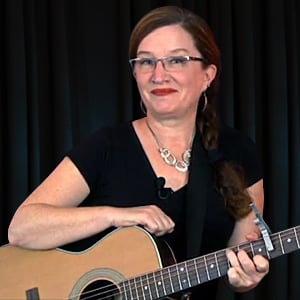
[Lisa McCormick]

Lisa McCormick


Lisa hails from the northeast US. She started playing an old Stella Harmony guitar of her fathers at age 10, and during her teen years Lisa studied folk, classical, blues, and acoustic rock styles. In college she took classes in music theory, but largely focused on Education, getting her degree from the University of New Hampshire.

After college, lightning struck and Lisa realized she wanted to fully pursue a career in music. Since then, she has been a full-time touring artist, recorded four CD's of her original music, and has received regional and national recognition for her songwriting and performance- including Grand Prize in the USA Songwriting Contest, and First Prize in the Mixx Magazine Indie Band Contest.

Lisa's long-standing influences include classic 60s and 70s artists (James Taylor, The Beatles, Neil Young, Joni Mitchell, Jimmie Spheeris), and in recent years she's taken an interest in world music, latin, and jazz. Not only passionate about performing and recording, Lisa loves to teach, and has worked with hundreds of beginner and intermediate students over the years.

Combine the talented guitarist and singer/songwriter with the experienced and patient guitar teacher and the degreed educator, and you get one fantastic addition to our team of instructors here at Guitar Tricks. Lisa has over 200 lessons on our site, and specializes in beginning techniques and acoustic guitar approaches such as fingerpicking.

For more personal information from Lisa herself, go to the "More Instructor Info" section on this page. You can also post any questions or comments directly to her in her personal forum, using the Message button to the left.

Intro to Country Strumming 1: Getting Started

  • Focus: Technique
  • Style:
  • Difficulty:

In this set of lessons, we’ll learn the basics of strumming the guitar, Country Music style. While these lessons are demonstrated on acoustic guitar, the same techniques may be used on electric guitar. Basic guitar strumming skills are central to playing Country Music. From the early roots of Country music, to today’s contemporary country stars and styles, you’ll find strummed guitar as the core of virtually every Country style song. While this is an Introductory course, it assumes a basic level of familiarity and comfort on your part as to playing basic...

Intro to 12 Bar Blues: What Makes the Blues "The Blues"?

  • Focus: Theory
  • Style:
  • Difficulty:

What is the 12-Bar Blues? In a nutshell, it is a piece of blues-style music consisting of 12 measures (or “Bars”), which follow a set of consistent and predictable chord changes. The Blues may also be enhanced by using certain types of chords, and playing certain types of improvisational notes, licks, or scales. But at it’s core is the cyclical chord progression, which will remain consistent no matter what key you play it in. This set of introductory lessons will follow this chord 12-Bar Blues chord progression: //: I / I / I / I / / IV / IV ...

Wild World 2: Getting Into the Verses

  • Focus:
  • Style:
  • Difficulty:

The Intro section of this song is the musical equivalent of the first half of a verse structure. Keep the rhythm tight and punchy, and the chords good and crisp.


4 Strategies for Faster Chord Changes I: Shared Notes

  • Focus: Chords
  • Style:
  • Difficulty:

One of the most challenging tasks for a new guitarist can be making chord changes smoothly and quickly, without creating a pause in the music. Often times, coming up with a specific strategy for getting from one chord to the next can make all the difference. This first lesson looks at chords which share one note in common. By holding this note in place while you make the switch from the first chord to the second chord, you keep your hand oriented and in position, and the chord change goes much more smoothly. Practice the following chord changes, and keep the co...

Wild World 1: What's the Big Picture?

  • Focus:
  • Style:
  • Difficulty:

Take a complete tour of this terrific song in this series of lessons. We'll look at everything from the chord structure and strumming rhythms, to the signature riffs and the songwriting sensibilities. While this song can be played at an advanced level by incorporating all the riffs, it can also be enjoyed at an intermediate level by just staying with the chords and rhythmic strumming.


Intro to Country Strumming 2: Get Strumming! Key of A

  • Focus: Technique
  • Style:
  • Difficulty:

In this lesson, we’ll use this bass/strum technique, and play a chord progression in the key of A. Try to play this along with me. A / A / D / D / A / A / E / E / A / A / D / D/ A / E / A / A / In the next lesson, we’ll stick with the same technique, but we’ll ramp up the speed a bit, and play the song with a country band.


Country Strumming: Build on the Basics 1: Add an Upstroke!

  • Focus: Technique
  • Style:
  • Difficulty:

In this set of lessons, we’ll build on the basics of guitar strumming technique, by adding an upstroke on an 8th note count. We’ll also work on 2 essential left hand techniques (Alternating Bass, and Bass Runs) which will give your strumming a little extra Country flavor. While these lessons are demonstrated on acoustic guitar, the same techniques may be used on electric guitar. The techniques presented in this course are Essential Rhythm Guitar techniques, applicable to strumming the guitar in a wide variety of styles and genres. While this course presents...

12 Bar Blues in C: Quarter Note Strum

  • Focus: Exercises
  • Style:
  • Difficulty:

Now let’s play a 12 bar Blues progression in the key of C, using a quarter note strumming pattern. To determine the likely chords you will encounter in the key of C, you first want to figure out what the “one chord”, “four chord”, and “five chord” will be. If C is chord number one, simply count up the C scale one note at a time to determine number four and number five. C=1 D=2 E=3 F=4 G=5 A=6 The “one” (I), “four” (IV), and “five” (V) chords will be played as major chords (not minor ch...

12 Bar Blues in C: Eighth Note Strum

  • Focus: Exercises
  • Style:
  • Difficulty:

Now let’s play a 12 bar Blues progression in the key of C, using an eighth note strumming pattern. When playing eighth notes, it is like you have changed the count to “One and, two and, three and, four and.” The newly added “and” beats are played with an upstroke of the pick. Your hand does not move faster, or go out of it’s way to achieve those extra upstrokes, as the pick is going by anyway on its way to the next downstroke. Simply let the pick graze the strings as it passes up towards the ceiling. In the last lesson, we determined that the major ...

Intro to Country Strumming 3: Your Band Awaits You

  • Focus: Technique
  • Style:
  • Difficulty:

In this lesson, we’ll use this bass/strum technique, and play the same chord progression in the key of A. We’ll ramp up the speed a bit, and play it along with a band Play this along with me and the band: A / A / D / D / A / A / E / E / A / A / D / D/ A / E / A / A / In the next lesson, we’ll stick with the same technique again, but we’ll ramp up the speed even more, and play the song with a slightly different feel, called a “Shuffle beat”. And we’ll invite the country band to join us once again!

12 Bar Blues: Major Barre Chords: Find the I, IV, V the Easy Way!

  • Focus: Chords
  • Style:
  • Difficulty:

When you play a 12 Bar Blues progression on the guitar using barre chords, it is quite easy to find the I, IV, and V chords, as they line up in a very systematic and consistent manner on the neck of the guitar. Of course, you can always count up the scale of whatever key you are in to determine the I, IV, and V chords. For instance, in the key of D, we would have: D = 1 E = 2 F# = 3 G = 4 A = 5 B = 6 But when you use Barre chords, there is another, easier, way to determine the I, IV, and V chords a...

12 Bar Blues in C: Play Along!

  • Focus: Exercises
  • Style:
  • Difficulty:

This lesson offers you the chance to try to play the 12 Bar Blues in the key of C along with the band. The chord progression goes like this: //: C / C / C / C / / F / F / C / C / / G / G / C / C :// Listen to my starting count and the drumbeat to get going, and see if you can play long with the video. It’s a great way to practice!


Country Strumming Essentials 1: Now for the Real Good Stuff

  • Focus: Technique
  • Style:
  • Difficulty:

In this set of lessons, we’ll build on the foundational guitar strumming techniques that you have been working on in previous lessons. We’ll be working with full-measure strumming patterns, eighth notes, and….GHOSTS! While these lessons are demonstrated on acoustic guitar, the same techniques may be used on electric guitar. The techniques presented in this course are Essential Rhythm Guitar techniques, applicable to strumming the guitar in a wide variety of styles and genres. While this course presents these skills in a Country-style context, these skill...

Intro to Country Strumming 4: The Band Plays a Shuffle

  • Focus: Technique
  • Style:
  • Difficulty:

In this lesson, we’ll stick with the same bass/strum technique, and the same chord progression in the key of A, but we’ll ramp up the speed even, and play the song with a shuffle beat. Play this along with me and the band: A / A / D / D / A / A / E / E / A / A / D / D/ A / E / A / A / In the next lesson, we’ll stick with the same technique again, but we’ll change the rhythm to 3/4 time, or “Waltz time”. And of course, we’ll invite the country band to join us once again!

Intro to Country Strumming 5: The Band Plays a Waltz

  • Focus: Technique
  • Style:
  • Difficulty:

In this lesson, we’ll stick with the same concept of the bass/strum technique, but alter it to accommodate 3/4 time, otherwise known as Waltz Time. To play in 3/4 time, strike the bass note once, then follow that with 2 strums of the remaining strings. These three steps add up to one measure of music in 3/4 time. Once again, we’ll use the same chord progression in the key of A, but this time we’ll be playing in 3/4 time. Play this along with me and the band: A / A / D / D / A / A / E / E / A / A / D / D/ A / E / A / A /

12 Bar Blues in D: Eighth Note Strum

  • Focus: Exercises
  • Style:
  • Difficulty:

Now let’s play a 12 Bar Blues progression in the key of D, using an eighth note strumming pattern. To determine the likely chords you will encounter in the key of D, you first want to figure out what the “one chord”, “four chord”, and “five chord” will be. If D is chord number one, simply count up the D scale one note at a time to determine number four and number five. D=1 E=2 F#=3 G=4 A=5 A=6 In the key of D, the I, IV, and V chords will be D, G, and A. When applied to the 12 bar Blues structure,...

Country Strumming: Build on the Basics 2: Classic Country Candy: Alt. Bass

  • Focus: Technique
  • Style:
  • Difficulty:

In this lesson, we’ll learn the technique called Alternating Bass. In the first half of a measure of 4/4 music, you’ll play the standard bass note for whatever chord you are playing. In the second half of the measure, you’ll play an alternate bass note. On a C chord, your alternate bass note will be G (6th string, 3rd fret). On an F chord, your alternate bass note will be C (5th string, 3rd fret). On a G chord, your alternate bass note will be D (4th string, open). On an D chord, your alternate bass note will be A (5th string, 3rd open)....

Intro to Country Strumming 6: Let's Switch to a New Key

  • Focus: Technique
  • Style:
  • Difficulty:

In this lesson, we’ll switch to the key of E. We’ll use this bass/strum technique, and play a chord progression in the key of E. Try to play this along with me. E / E / A / A / E / E / B7 / B7 / E / E / A / A / E / B7 / E / E / In the next lesson, we’ll stick with the same technique, but we’ll ramp up the speed a bit, and play the song with a country band.


3-Chord Folk Guitar 1: What is Folk Guitar, Anyway?

  • Focus: Style Tutorial
  • Style:
  • Difficulty:

Folk music is music "of the folks". In other words, traditional folk songs have evolved over time and throughout cultures. There is generally no one known author for a traditional folk song. These songs frequently tell a story or address a community purpose. The main role of the guitar in traditional folk songs is to support the song harmonically and rhythmically. Therefore, the guitar parts may remain rather simple while the "star" of the song is the lyrics and the singing. As a guitar learner, sometimes what you want to do is to practice hard and hone your guitar s...

12 Bar Blues in D: Play Along!

  • Focus: Exercises
  • Style:
  • Difficulty:

This lesson offers you the chance to try to play the 12 Bar Blues in the key of D along with the band. The chord progression goes like this: //: D / D / D / D / / G / G / D / D / /A / A / D / D :// Listen to my starting count and the drumbeat to get going, and see if you can play long with the video. It’s a great way to practice!


Wild World 4: Those Awesome Riffs

  • Focus:
  • Style:
  • Difficulty:

Notice how the first riff is simply a C Major scale, played backwards. Cool! Use this song as a good excuse to practice your C scale. Make sure that your pick technique allows the groove to carry through, whether you are strumming the chords or playing the riffs. You don't want the riff to feel interruptive of the groove. Use alternating up and down strokes with the pick, and keep it loose.


Wild World 3: Ooo Baby Baby, It's the Chorus

  • Focus:
  • Style:
  • Difficulty:

While the rhythmic feel of the chorus is not all that different than the verse, it is played with more energy and a looser strum. The signature riffs in this chorus give it a lot of extra personality, but if they are beyond your skill level, it is fine to just keep to the strumming and the chords.


4 Strategies for Faster Chord Changes II: Slide Into Position

  • Focus: Chords
  • Style:
  • Difficulty:

One of the most challenging tasks for a new guitarist can be making chord changes smoothly and quickly, without creating a pause in the music. Often times, coming up with a specific strategy for getting from one chord to the next can make all the difference. This third lesson looks at chord pairs in which one finger remains on the same string as you change from one chord to the next chord, allowing you to slide that finger rather than pick it up and lose your hand’s orientation to the string. In the first example, D to A, the ring finger remains attached to ...

3-Chord Folk Guitar 4: Song Project: Willie Taylor

  • Focus: Song
  • Style:
  • Difficulty:

Hey, this one has only TWO chords! Cool! WILLIE TAYLOR (traditional ballad) Willie (D) Taylor and his youthful (G) lover, Full of (D) mirth and loyal-(G)ty, They were (D) going to the church to be (G) married, He was (G) pressed and sent on (G) sea. Dolly dilly (D) dum dilly dum dum (G) day (G) She dressed herself up like a sailor On her breast she wore a star Her lovely fingers long and slender She gave them all just a smear of tar. Dolly… On the ...

3-Chord Folk Guitar 2: What Basic Skills Do I Need?

  • Focus: Technique
  • Style:
  • Difficulty:

In this lesson we'll do a quick run-through of some of the basic guitar skills that will come into play in learning the songs in this series.


Guitar Lessons Learn Guitar
© Copyright 1998-2009 GuitarTricks. All rights reserved.

Learn Guitar Online