Guitar Tricks
Username:     Password:
Guitar Lessons (866) 216-3786

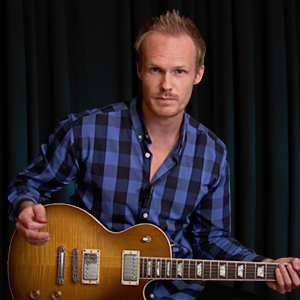
[Ben Lindholm]

Ben Lindholm


Ben was born in 1983, and grew up in Gothenburg on the west coast of Sweden. He started playing piano at age 10 and guitar at the age of 12, but it was after seeing Jimi Hendrix light his guitar on fire in a TV documentary at age 13 that he started practicing seriously, proceeding to learn virtually every Hendrix song under the sun. Though mostly self-taught, Ben took private lessons from several Swedish guitar teachers while in his teens, and received a scholarship for his overall musical skills.

After gigging around Gothenburg in various bands, including a Dream Theater cover band, Ben moved across the pond to Los Angeles to study at Musicians Institute. While there, he honed his skills with Russ Bolton, Jean-Marc Belkadi, Takeshi Akimoto, along with fusion and blues master Scott Henderson and top session player Carl Verheyen.

While mostly a metal player in the vein of Hendrix, John Petrucci, Jimmy Page, Yngwie Malmsteen and the like, Ben has listened to and absorbed the influence of jazz and country players like George Benson, Pat Metheny, Mike Stern, Chet Atkins, and Brent Mason. He also ventures into funk, blues, country/bluesgrass, and acoustic fingerpicking.

Now back in Sweden, Ben is busy composing songs (mostly acoustic instrumentals), teaching guitar privately, and playing live and in the studio.

For more personal information about Ben, go to the "More Instructor Info" tab. You can also post any questions or comments directly to him in his personal area of the Guitar Tricks forum.

7 Great Warm-ups - Chromaticism Part 1

  • Focus: Exercises
  • Style:
  • Difficulty:

This first exercise is a pretty simple exercise with 4 notes per string. Each finger has its own fret; your index finger on the 1st fret, your middle finger on the 2nd, your ring finger on the 3rd fret and your pinky on the 4th fret. Simply go up the frets and strings in order, and when you reach the top, move your entire hand up one fret, and play the exercise coming down the strings. Make sure you practice with a metronome, playing with both 8th/16th notes and 8th/16th note triplets. It is also important to get as much as possible out of the exercise by changing it ...

7 Great Warm-ups - Intro

  • Focus: Exercises
  • Style:
  • Difficulty:

In this tutorial I will show you a few of my favorite warm-up exercises, played with strict alternate picking - down, up, down, up - all throughout the exercises. These exercises consist of symmetrical patterns so that you don't have to worry about any scale patterns. Warming up before you start a gig, jam session or practice routine really helps your playing. Having warm hands and doing a bit of gentle finger stretching even before you start with these exercises helps even more. Good luck!

7 Great Warm-ups - Chromaticism Part 2

  • Focus: Exercises
  • Style:
  • Difficulty:

Exercise number two is similiar to exercise number one, but this time we're only going to play three notes per string, thereby adding the difficulty of having to change your picking pattern every other string. You're still going to use strict alternate picking, but on every other string you will have to start with an upstroke, which I think makes it a lot harder to play fast. You should also use every possible finger combination with your fretting hand - Index - middle - ring Index - middle - pinky Index - ring - pinky Middle - ring - pinky ---> i find this to...

7 Great Warm-ups - Walking Fingers

  • Focus: Exercises
  • Style:
  • Difficulty:

In this exercise you're going to play two different notes on each string, and repeat them before moving on to the next string, which means 4 notes per string. Work with all of your fingers - the ring finger and pinky combination will probably be the most challenging - and also play it backwards all over the neck. A good variation is to play the exact same exercise without the repeats, making then picking a bit harder since you have to change strings after only two notes. Both of these exercises make for excellent practice for building pentatonic scale speed.

7 Great Warm-ups - The Spider

  • Focus: Exercises
  • Style:
  • Difficulty:

The Spider is a bit more difficult than the other exercises, especially for your picking hand, since you have to change strings all the time. This makes it great practice for warming up and improving your technique for playing arpeggios for example, since they often involve only one note per string. Each finger has its own fret and string in this exercise. Start on the low E string, on fret 1 with your index finger. Put your middle finger on fret 2 of the A string, your ring finger on fret 3 of the D string, and your pinky on fret 4 of the G string. Then reverse your fin...

7 Great Warm-ups - The Finger Folder

  • Focus: Exercises
  • Style:
  • Difficulty:

This is the last exercise of this Warmup tutorial, and it's all about finger folding. At times, you're going to run into playing situations where one finger has to be able to fret several notes. In lead playing, this usually means folding your finger over two string, forming a 2 string barre. This exercise is great for warming up and practicing that skill. You'll notice that playing the top note first is much harder, since that note isn't fretted by the tip of your finger, but rather your mini barre.

7 Great Warm-ups - Walking Fingers Variation

  • Focus: Exercises
  • Style:
  • Difficulty:

Exercise #4 is very similar to Exercise #3, but in this one we add the difficulty of changing the fingering on each string. Start with frets 1 and 2 on the low E string, play frets 1 and 3 on the A string, and frets 1 and 4 on the D string. Repeat the process on the G, B, and high E strings. Change it up as much as you can, play it backwards, using triplets, etc. Challenge yourself!


Zakk Wylde 1 - Chicken pickin'

  • Focus: Artist
  • Style:
  • Difficulty:

In this video I present to you a few licks that are quite useful when developing your chicken pickin' technique. Zakk uses chicken pickin' a lot, and apart from the difference in sound, this technique really opens up new ways of playing, making things that could be really hard to play with just a pick, seem quite easy. Practice chicken pickin' with both your middle and ring fingers.


7 Great Warm-ups - The Spider 2

  • Focus: Exercises
  • Style:
  • Difficulty:

The Spider 2 is much like Exercise #5, but here you're only going to work with two strings at a time. Start on the first fret on the low E with your index finger, and then play fret 2 on the A string with your middle finger. Play the third fret of the low E with your ring finger and the 4th fret on the A string with your pinky. Reverse your fingering and come back down: Index finger: 1st fret A string Middle finger: 2nd fret low E string Ring finger: 3rd fret A string Pinky: 4th fret low E string Continue like this across all the strings and all the way up t...

Turkish March - Rhythm Guitar Demo

  • Focus: Song
  • Style:
  • Difficulty:

This is the demonstration video for Mozart's Turkish March - Rhythm Guitar. Lead Guitar Tutorial Turkish March - Lead Guitar Demo


Zakk Wylde - Introduction

  • Focus: Artist
  • Style:
  • Difficulty:

In this tutorial I'm going to show you a bunch of licks in the style of great Ozzy Osbourne guitar player Zakk Wylde - meaning full blues and pentatonic shredding mayhem. First of all - get these three scales really under your fingers: The Minor Pentatonic, The Major Pentatonic, and The Blues Scale. Zakk Wylde mixes them up a lot, but it's really useful to be able to separate them both by ear, and when you're playing. Preferably, learn these scales in ALL keys, and all positions, so you can move around all over the neck with ease. If you're just starting to learn t...

Zakk Wylde 3 - Pentatonic shred lick

  • Focus: Artist
  • Style:
  • Difficulty:

This is a classic pentatonic rock/blues lick that is very useful. I'm showing you the main idea here, but take it to all kinds of different patterns and sets of strings and go up and down the neck! It's a real eternity lick that can go on forever (but make sure you practice escaping too).


Zakk Wylde 4 - More shred licks

  • Focus: Artist
  • Style:
  • Difficulty:

Here are some more Zakk Wylde style shred licks for you, all based off of the pentatonic scale and the blues scale (with variations).


Turkish March - Lead Guitar Demo

  • Focus: Song
  • Style:
  • Difficulty:

This is the demonstration video for Mozart's Turkish March - Lead Guitar. Turkish March - Rhythm Guitar Demo Rhythm Guitar Tutorial.


Zakk Wylde 5 - Pinch Harmonics

  • Focus: Artist
  • Style:
  • Difficulty:

The use of pinch harmonics has become one of the trademarks of Zakk Wylde's sound, and in this lesson I will show you how to make these overtones come out. I put up a simple little tab just so you can see how pinch harmonics are written. You'll learn best by watching the video.


Blues Shred - Common Lick in E

  • Focus: Tricks
  • Style:
  • Difficulty:

This is one of the most common blues shred licks out there, and it's used by all sorts of players. It takes a bit of picking technique though to really make it stand out as you need to play it quite fast in order for it to sound good. This lick sounds best with lots of distortion. Also, try it with your wah pedal on. Move the lick around to all the positions of the pentatonic scale.


Zakk Wylde 2 - Some more chicken pickin'

  • Focus: Artist
  • Style:
  • Difficulty:

Here's a little blues lick for you that Zakk uses a lot in his blues and shred improvising. It's a classic blues/country lick and sounds great both when played fast and slow. It's also a very good lick for practicing chicken pickin'.


Harmonize Simple Arpeggios

  • Focus: Chords
  • Style:
  • Difficulty:

This is the first video I made for Gibson.com, and it shows how you can harmonize simple triad (mostly) arpeggios to develop a cool melodic soloing idea over a metal type backing track. To be able to construct your own arpeggios and harmonize them it is a good idea to learn the different shapes of triads on the guitar. With that knowledge, it becomes pretty easy to harmonize them, as you play one shape of a particular arpeggio with Guitar 1, then move up to the next shape you've learned of that same arpeggio, and play it with Guitar 2. The arpeggios now become harmonized...

Turkish March - Part A Rhythm

  • Focus: Song
  • Style:
  • Difficulty:

Here is the first part of the rhythm guitar (left hand on the piano) for Mozart's Turkish March. Below the notation you'll find a midi backing track in two tempos: 70 bpm and 126 bpm (full speed). Turkish March - Part A Lead


String Skipping Arpeggios

  • Focus: Technique
  • Style:
  • Difficulty:

Here's a cool technique that could help you build some speed when playing arpeggios up and down. Just move the third note of each arpeggio (which happens to be the fifth in all of the arpeggios in this lesson) to the same string as the fourth note, which lets you play two notes per string, rather than two, one, one, one, which would probably require sweep picking if you want to play fast. In the case of a Dm arpeggio starting on the minor third, F, you're going to move the fifth, A, which is on the 10th fret of the B string, down to the 14th fret of the G string. Same no...

Turkish March - Part A Lead

  • Focus: Song
  • Style:
  • Difficulty:

Here is the first part of the lead guitar (right hand on the piano) for Mozart's Turkish March. Below the notation you'll find a midi backing track in two tempos: 70 bpm and 126 bpm (full speed). Turkish March - Part A Rhythm


Pedal Notes

  • Focus: Exercises
  • Style:
  • Difficulty:

Here is the second video I made for Gibson.com, and it shows you how you can use pedal notes with arpeggios to create melodic sounding lines following a chord progression. A pedal note (or pivot note) is a note you keep coming back to in between other, changing notes. I basically just use the notes within the arpeggios of chords in the backing track, with an added 9 to some of the chords. This just makes it sound sweet! As for picking goes, I use strict alternate, but starting with a DOWNSTROKE on the pickup note. This means I'm playing all the DOWNBEATS with UPSTROKE...

Blues Shred - b5 Mania 1

  • Focus: Tricks
  • Style:
  • Difficulty:

Here's a cool little lick that you can repeat forever. Just work it up to light speed and add a lot of gain and maybe a wah and you're good to go. This is a typical Zakk Wylde style lick, just ripping the blues scale apart... The flat five, which is the only addition to the pentatonic scale that makes it the blues scale, is what gives this lick a mean, bluesy sound. In this case we're in the key of A, so the b5 is Eb. Remember that I use a pull-off between the first and second notes of the lick, all the rest is picked. I use alternate picking for everything, except fo...

Turkish March - Lead Guitar Intro

  • Focus: Song
  • Style:
  • Difficulty:

Welcome to my tutorial on the lead guitar for Mozart's Turkish March, or Rondo Alla Turca, as it's really called. This is a pretty tricky piece, especially when played on an acoustic guitar. A good tip is to practice it first on an electric guitar and then move over to the acoustic if you feel like it. Rhythm Guitar Tutorial Turkish March - Rhythm Guitar Intro


Turkish March - Rhythm Guitar Intro

  • Focus: Song
  • Style:
  • Difficulty:

Welcome to my tutorial on the rhythm guitar for Mozart's Turkish March, or Rondo Alla Turca, as it's really called. This is a pretty tricky piece, especially when played on an acoustic guitar. A good tip is to practice it first on an electric guitar and then move over to the acoustic if you feel like it. I use chicken picking/hybrid picking (i.e. pick and fingers) for most of the rhythm guitar part, but if you're not yet comfortable with that technique, feel free to try other ways of playing it.

Guitar Lessons Learn Guitar
© Copyright 1998-2009 GuitarTricks. All rights reserved.

Learn Guitar Online